A roof does not last forever. After many years, it starts to show problems. Some issues are small. Roof replacement signs tell you when to replace the roof and stop wasting money on quick fixes. When you know these signs, you can avoid big repair bills and damage inside your home.
Many people repair the same area again and again. But sometimes a repair will not fix the real problem. The roof may be too old, too weak, or too damaged. In this case, a new roof is safer and cheaper in the long run.
A new roof also helps your home stay warm, dry, and energy-efficient. It can even make insurance claims easier if a storm hits.
This guide will help you understand each warning sign. It will also help you decide between a new roof vs repair so you can make the best choice for your home.
Why Knowing Roof Replacement Signs Matters
Your roof keeps your home safe and dry. That is why noticing roof replacement signs is important. Small problems can grow if you ignore them. A tiny leak can turn into a big, expensive problem.
Homes often show bad roof signs before serious damage happens. Spotting them early can stop problems like rotting wood, weak roof boards, or mould in the attic. It also means you won’t need to keep fixing the same roof again and again.
Repairing the roof at the right time saves money. It also helps with insurance, because old or damaged roofs may not be covered.
Roof Repair or Full Replacement: How to Decide
Deciding between a repair and a full roof replacement can be hard. Knowing when to replace the roof helps you make the best decision.
Repairs are good for small problems. A few broken shingles or small leaks can be fixed quickly and cheaply. But if repairs keep happening, they can cost more over time and may not stop bigger damage.
A new roof lasts longer, protects your home better, and can save money on future repairs. It also stops problems caused by old or worn-out materials.
Looking at the signs of roof replacement cost and roofing cost per m2 in Ireland can help you plan your budget. Spending more on a full replacement now can save money later.
he 7 Major Signs You Need a Roof Replacement
Your roof can show signs before it completely fails. Knowing these signs helps you choose between a new roof vs repair. Some problems are small and easy to fix. Others mean repairs will not last.
If you see more than one problem at the same time, it may be time to start considering a full roof replacement. Fixing issues early can save money and stop damage to your home.
The list below will help you spot these warning signs. It will also help you make the right choice for your roof and your home.
Your Roof Is 20–30+ Years Old
Every roof has a limit to how long it lasts. Most asphalt shingle roofs last about 20 to 25 years. Metal and flat roofs can last longer, sometimes up to 30 years. Over time, shingles get weak, nails loosen, and the roof can start to fail.
Knowing when to replace the roof helps you avoid bigger problems. Old roofs leak more often, lose heat, and can damage the wood underneath. Small repairs may not last. A full house roof replacement is often safer and cheaper in the long run.
In Ireland, the age of your roof also affects cost. Older roofs usually have higher roof replacement prices.
Prices vary by material. Metal roof replacement Ireland or flat roof replacement Ireland may cost more, but age is always important.
Replacing your roof before it fails keeps your home safe. It saves money, energy, and stress. Checking your roof’s age is an easy way to plan for the future.
Shingles Are Curling, Cracking, or Missing
Shingles keep your roof safe and dry. If you see curling, cracking, or bald spots, it is a serious warning. Repairs will not last long with this kind of damage.
These are clear roof replacement signs. Looking for signs of roof replacement shingles helps you know how bad the roof is. Bald or broken shingles can let water in and damage the wood below.
Other bad roof signs include missing ridge shingles or shingles that lift in strong winds. These problems can also be caused by poor ventilation or moisture under the roof.
You can check your roof from the ground or with binoculars. Look for cracks, missing pieces, or bare spots. If you see major damage, a full roof replacement is usually the safest choice.
Frequent Leaks or Water Stains Indoors
Water inside your home is a serious sign. Leaks in the attic, stains on the ceiling, or a damp smell show the roof is failing. You might also see mould, which can be harmful.
These problems mean the roof surface or underlayment is damaged. Other bad roof signs include wet attic insulation, rotting wood, or sagging decking.
Check your attic often to catch leaks early. Acting early protects your home, keeps your family safe, and can save money on bigger repairs later.
Sagging Roof Deck or Structural Weakness
A sagging roof is a serious warning. It means the roof deck, rafters, or joists are weak or damaged. Water, rot, or long use can make the wood bend or break.
This is a clear sign of when to replace the roof. Patching a sagging roof can be unsafe and may fail quickly.
Other bad roof signs include dips, waves, or uneven lines on the roof. These show the roof structure is failing. Ignoring this can cause leaks or even parts of the roof to collapse.
Rising Energy Bills from Poor Insulation
An old or worn roof can make your home lose heat. Poor attic insulation or blocked ventilation lets warm air escape in winter and hot air in summer. This makes your heating and cooling costs higher.
High energy bills are clear roof replacement signs. They show the roof may be worn or damaged.
Energy loss also affects roof replacement cost factors. Sometimes, a full roof replacement is the best way to fix poor insulation and ventilation. It can make your home more comfortable and save money on bills.
In Ireland, worn roofs can lower BER ratings and fail to meet attic insulation standards. Replacing the roof fixes these issues and makes your home energy-efficient.
Storm or Wind Damage to Shingles or Flashing
Strong winds and heavy storms can damage your roof. Shingles may break or blow off. Panels can come loose, and flashing can bend or tear.
These are clear bad roof signs. Missing or broken shingles are strong signs of roof replacement.
When the roof is badly damaged, you need to think about a new roof vs repair. Patching parts may only last a short time. A full replacement gives better protection and stops future problems.
Storm damage can also make your home unsafe. Weak spots can cause leaks, water damage, or structural issues. Replacing the roof on time keeps your home strong and safe.
Heavy Moss, Algae, or Mould Growth
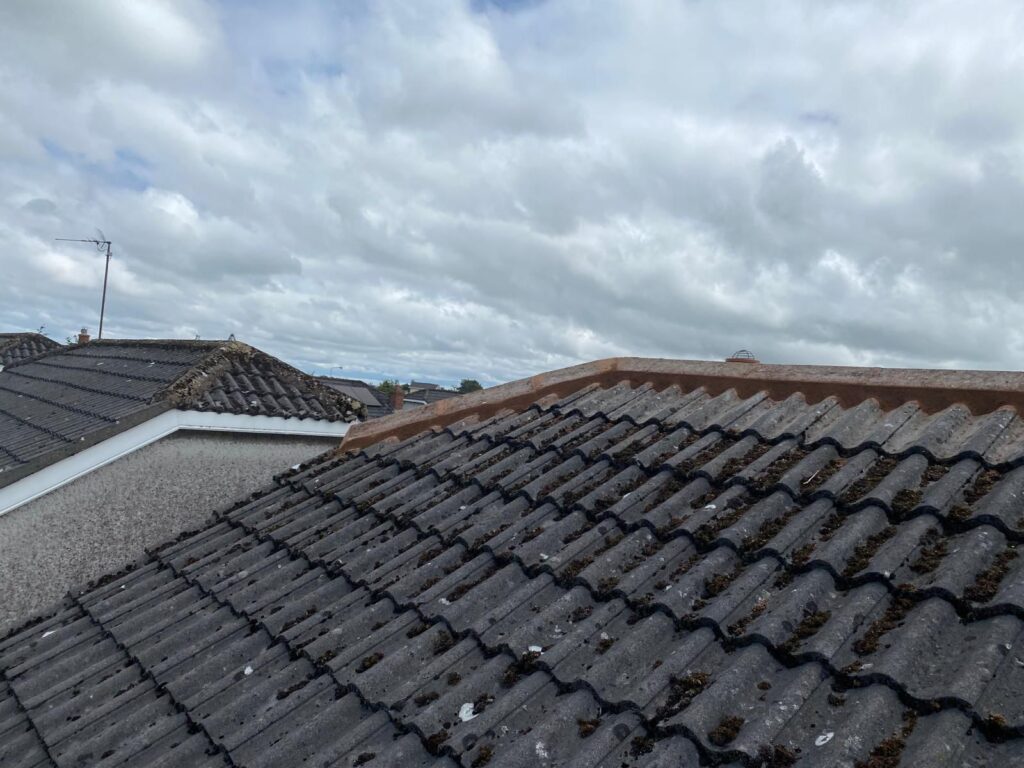
Moss, algae, and mould on a roof are more than just ugly. Moss holds water, which can make the wood underneath start to rot. Mould and algae often mean water is trapped under the shingles, especially on older roofs.
They show the roof is worn out and may not protect the structure under it. Small repairs usually do not fix this problem.
It also caused soft spots, warped shingles, or big discoloured areas. Fixing the roof early prevents bigger damage and extra costs.
What’s Included in a Full Roof Replacement?
A full house roof replacement is more than just new shingles. It replaces all parts that keep your roof strong and safe.
A full replacement usually includes:
- Removing old shingles to start fresh.
- Replace the underlayment to stop water from getting in.
- Updating flashing around chimneys, vents, and edges.
- Checking the roof deck and fixing any damage.
- Installing ridge shingles and drip edges for better protection.
- Improving ventilation to prevent moisture and heat build-up.
Different roofs need extra steps:
- Metal roof replacement in Ireland may need new panels and fasteners.
- Flat roof replacement in Ireland may need new membranes and drainage layers.
A full replacement makes your roof stronger and longer-lasting. It fixes old damage and keeps your home safe from leaks, wind, and bad weather.
Roof Replacement Costs in Ireland
Roof replacement in Ireland can cost different amounts. The price depends on the type of roof, size, and materials.
The average roof replacement cost changes if you have a metal, flat, or shingle roof. Other factors include roof age, slope, and how much repair work is needed.
You can check roof replacement Ireland prices to see what others pay. A roof cost calculator in Ireland can help you estimate your own cost. It looks at roof size, materials, and labour.
Some homeowners can get a roof replacement grant in Ireland. This can lower the cost and make a new roof more affordable.
Knowing costs also helps with insurance. A planned replacement protects your home and makes claims easier.
Roof Replacement, Insurance & Warranties
Your roof affects your insurance and warranty. Insurers check the roof’s age, any leaks, and maintenance history. Older roofs often get less coverage or higher costs.
Watching for roof replacement signs helps you decide the best time to act. A new roof makes insurance claims easier and protects your home from future damage.
Choosing a new roof vs repair matters for coverage. Repairs on very old roofs may not be fully covered. A full replacement is often a smarter choice.
Some homeowners can also get a roof replacement grant in Ireland, which can help reduce costs.
Roof Replacement in Dublin – Expert Help
Knowing when to replace the roof can be hard. If you see several warning signs, call the experts at Aspect Roofing & Property Maintenance. We check your roof and suggest the best solution.
If you are considering a full roof replacement, our team can confirm exactly what your home needs. We look at shingles, decking, underlayment, and ventilation to see if repairs are enough or a full replacement is better.
Small problems can get worse quickly. With Aspect Roofing & Property Maintenance, you get trusted inspections and reliable roof repairs in Dublin.
Calling the experts early saves money, prevents leaks, and keeps your home safe. Trust Aspect Roofing & Property Maintenance to protect your roof and your home.
Conclusion
Roofs do not fail all at once. Problems appear slowly over time. Watching for roof replacement signs helps you notice trouble early.
Deciding new roof vs repair depends on the roof’s age and condition. Small repairs are fine for minor issues. Older or damaged roofs usually need a full replacement.
Early work keeps your home safe. It can save money and prevent bigger problems later. Paying attention to warning signs helps your roof last longer and protects your family.
Frequently Asked Questions About Roof Replacement
How to tell if roof shingles are bad?
Shingles are bad if they are cracked, curled, or missing. Bald spots or loose pieces are warning signs. If water gets in easily, the shingles need attention.
What does an old roof look like?
An old roof may have faded or worn shingles. You might see moss, algae, or sagging areas. Leaks or water stains inside the house are common signs.
What does a roof that needs to be replaced look like?
A roof that needs replacing has cracked or missing shingles. Moss, mould, or sagging spots are common. Multiple leaks or daylight in the attic are big warning signs.
How to tell when to replace a roof?
Look for age, damaged shingles, sagging, leaks, or high energy bills. If repairs keep coming back, it is time for a full replacement.
What does a roof that needs to be replaced look like?
It looks worn out with cracked, missing, or curled shingles. Bald spots, moss, mould, sagging, or leaks inside the house are signs.
How to tell if a roof is bad?
A bad roof has water stains, sagging areas, curling or missing shingles, or heavy moss and mould. Drafts or high-energy bills can also show problems.
What is the most expensive part of replacing a roof?
Materials and labour cost the most. High-quality shingles, metal panels, or flat roof membranes cost more. Steep roofs or complex designs raise labour costs.
What is the average lifespan of a roof?
Most asphalt shingle roofs last 20–25 years. Metal roofs can last 40–50 years. Flat roofs usually last 15–20 years. Regular maintenance can make roofs last longer.
What is the average price of replacing a roof?
Roof costs depend on size, material, and location. In Ireland, it can range from €5,000 to €15,000 for an average house. A roof cost calculator in Ireland can help estimate costs.
What to consider before getting a new roof?
Check the roof’s age, damage, and leaks. Think about a new roof vs repair, cost, insurance, and warranty. Ventilation, insulation, and material type also matter.
How much should it cost to put a new roof on?
Cost depends on size, materials, and labor. Small houses cost less. Large or complex roofs cost more. Grants or local incentives may lower the price.