
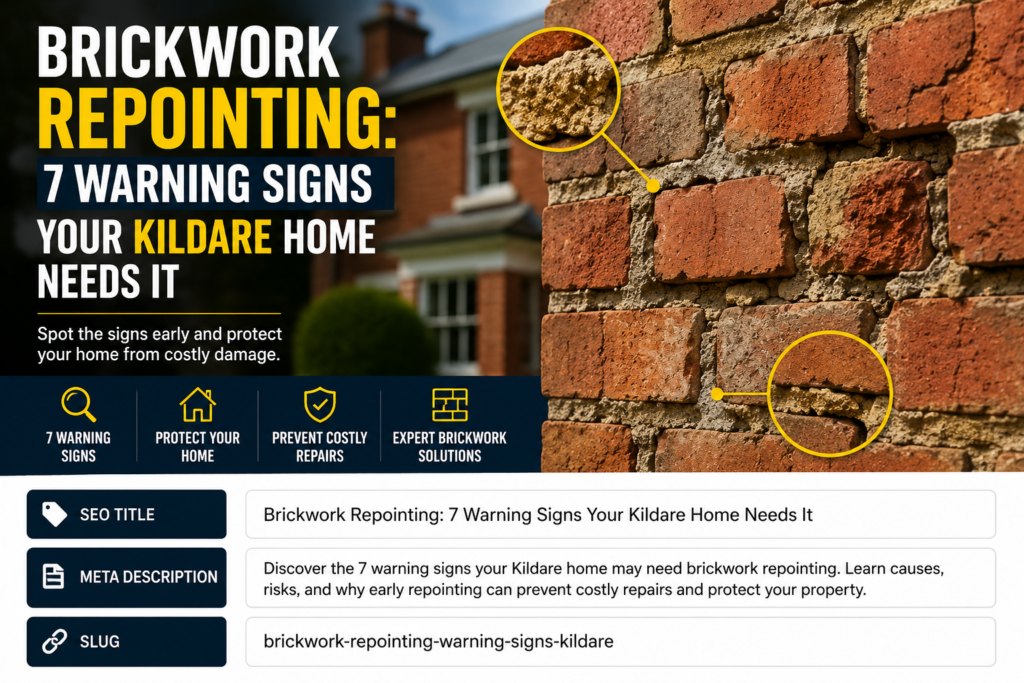
Brickwork problems in Kildare homes often develop slowly. The first signs appear in the mortar joints long before major damage becomes visible. In many cases, the mortar between bricks begins to weaken years before homeowners notice loose bricks, damp patches, or visible wall damage.
These early changes are easy to miss because they often blend into the normal ageing of a property. By the time crumbling joints, fine cracks, or damp patches become obvious, the wall may already have lost some of its ability to keep rainwater out.
This guide explains the seven warning signs of failing mortar, what causes them, and when a professional repointing assessment may be worthwhile for your Kildare home.
Why Does Brickwork Deteriorate Faster in Kildare’s Climate?
Kildare’s exposed weather conditions can accelerate the ageing of brickwork. Frequent rainfall, wind-driven moisture and freeze–thaw cycles place repeated stress on mortar joints, which are often the first part of the wall to show signs of damage.
When mortar absorbs moisture, freezing temperatures can cause the trapped water to expand, creating small fractures that become more noticeable through repeated weather exposure. Wind exposure can make the problem worse.
Certain areas of a property are more vulnerable than others, including chimney stacks, exposed gable walls, and the mortar joints around windows and doors. Because these areas receive more direct rainfall and wind exposure, deterioration often becomes visible there first.
Early attention allows homeowners to deal with smaller issues before they develop into larger brickwork repairs. These steps are also part of a wider property maintenance approach.
7 Signs That Your Home May Need Brickwork Repointing
In many cases, failing mortar shows visible changes before the surrounding brickwork begins to deteriorate. The challenge is knowing which signs are part of normal ageing and which indicate that the mortar is no longer providing reliable protection against moisture.
Let’s start with the 7 most common warning signs.
1. Crumbling or Missing Mortar Between the Bricks
Mortar naturally breaks down as it is repeatedly exposed to rain, wind, and freezing temperatures, causing the joints between bricks to weaken. A wall can appear perfectly sound from a distance, but a closer look may reveal recessed joints, small gaps, or mortar that breaks away easily.
This matters because mortar doesn’t just hold bricks together, it also helps keep rainwater out. When mortar joints fail, gaps can allow rainwater to penetrate the wall, which may lead to damp problems and frost-related damage.
Signs to look for include:
- Recessed or missing mortar
- Small gaps between bricks
- Powdery or crumbling joints
- Sandy debris beneath exterior walls
Chimneys and exposed walls often show these signs first because they receive the greatest amount of wind and rainfall.
Small areas of mortar loss may only require monitoring, but widespread damage or ongoing deterioration should be assessed before surrounding brickwork becomes affected.
2. Cracks Between the Bricks
Small cracks are common in many properties, but their size, location, and pattern determine whether they need attention. Hairline cracks can appear as buildings respond to normal movement, temperature changes, and natural settlement. What matters most is whether the crack is becoming wider, longer, or more noticeable over time.
Wider cracks create easier paths for water to enter the wall, which can affect both the mortar and surrounding brickwork during wet and freezing conditions. For this reason, an isolated crack is usually considered alongside its pattern, location, and whether it has changed over time.
One practical way to monitor a crack is to photograph it clearly and compare the image after a few months. Any noticeable change in size or pattern should be assessed to determine whether repair work is needed.
Visible cracks are often one of the first signs that the condition of the wall needs closer attention. Moisture issues are not always visible on the exterior. Sometimes the first indication is found indoors, such as damp patches, peeling paint, or recurring marks on internal walls.
3. Damp Patches Linked to Failing Brickwork
Damp patches can have several causes, and failing mortar is only one possible reason moisture may be entering a property. Other possible causes include leaking gutters, damaged flashing, roof defects, and condensation. Damaged mortar joints can also create entry points for rainwater, especially during periods of prolonged wet weather.
The most useful clue is often the connection between what you see indoors and the condition of the exterior walls.
Look for:
- Peeling paint or lifting wallpaper
- Persistent musty smells
- Damp patches after heavy rainfall
- Repeated mould in the same area
When these indoor signs appear, the wall may be allowing moisture into the property.
Damp that repeatedly returns usually means the source of the moisture has not been resolved. Repainting, removing mould, or improving ventilation may improve the symptoms, but they will not fix an ongoing water ingress problem.
A proper assessment can identify whether the moisture is coming from failed mortar joints, roofing issues, drainage problems, or another source.
4. Bricks Feel Loose or Out of Place
A wall can appear perfectly stable from the outside while individual bricks have already started to loosen. When mortar joints weaken, they provide less support between bricks, which can allow individual units to move or become unstable.
Early signs include:
- Slightly uneven or misaligned bricks
- Wider gaps between bricks
- Missing mortar around individual bricks
- The corners of the wall look less uniform
Unlike minor surface cracks, loose bricks indicate that the mortar is no longer providing reliable support and protection for the wall. Once movement begins, surrounding areas can become more vulnerable to moisture entry and further damage.
Avoid testing a loose brick by pushing it. Even gentle pressure may disturb already weakened joints or cause further movement. If you notice movement, avoid disturbing the area and have the condition assessed to determine whether repair is needed.
5. White Marks on Brickwork
Brickwork can show signs of moisture movement even when there are no obvious cracks or missing mortar. A fine white powder on the surface is often efflorescence, a natural salt deposit left behind when moisture moves through masonry.
Efflorescence itself is generally harmless, but repeated staining suggests that moisture may be passing through the wall on an ongoing basis. When damaged mortar joints allow rainwater into the wall, these deposits often return after cleaning. Cleaning the surface may remove the marks temporarily, but it will not address the source of the moisture.
Look for signs such as:
- White deposits returning after cleaning
- Staining around cracked or missing mortar
- White marks appear after long periods of wet weather
- Efflorescence combined with damp patches indoors
A single appearance of efflorescence is not usually serious, but repeated deposits alongside damp, damaged mortar or other defects need further investigation.
6. Mortar Failure Around Chimneys, Windows, and Exposed Walls
Some areas of a property experience much greater weather exposure than others, making them more likely to show mortar damage first.
Common areas to inspect include:
- Chimney stacks
- Exposed gable walls
- Mortar around windows and doors
- Upper exterior walls
- Garden walls facing strong winds
Wind-driven rain and repeated freeze–thaw cycles place additional stress on these areas, causing mortar joints to weaken faster.
You don’t need to climb a ladder to check. After heavy rain, inspect the exterior from ground level. Use binoculars or your phone’s zoom to check higher areas, then compare exposed sections with more sheltered parts of the property.
Mortar damage in one location does not always mean the entire property has a problem, but it should be checked regularly.
7. Several Warning Signs Appearing Together
Individual issues such as a small crack, minor mortar loss, or light staining may not always require repointing on their own. When several of these signs appear at the same time, they can point to a wider problem with the condition of the mortar.
A proper assessment looks at the overall condition of the brickwork rather than focusing on one isolated issue. Consider the following questions:
- Is mortar missing in several areas?
- Have cracks become larger over time?
- Does damp return after heavy rain?
- Are several warning signs developing at the same time?
If several answers are yes, the brickwork should be assessed to determine whether monitoring, local repairs or full repointing is required. No single sign confirms that repointing is necessary, but multiple issues occurring together are a strong reason to investigate the condition of the brickwork before repairs become more involved.
When Repointing Is Actually Needed
Cracks and damp patches can have different causes, and repointing is only needed when deteriorating mortar is contributing to the problem.
Minor movement, temperature changes, drainage issues, and ventilation problems can all contribute to cracks or moisture inside a property.
A professional inspections beyond the visible signs and checks what is causing the damage in the first place. Sometimes only small areas of repointing are needed, while other issues may require a completely different repair approach.
When Should You Call a Professional?
Minor issues, such as stable hairline cracks or small areas of worn mortar, can often be monitored rather than repaired immediately.
A closer assessment is recommended if you notice:
- Crumbling mortar across several areas
- Loose or shifting bricks
- Damp returning after heavy rainfall
- Mortar falling from the joints
- Damage around chimneys or other exposed areas
- Multiple signs appearing together
A professional assessment does not always lead to major repair work. Its purpose is to confirm what is happening and determine whether the brickwork needs monitoring, local repairs, or wider exterior and interior property repairs.
Frequently Asked Questions
Does every old house eventually need repointing of the brickwork?
No. The condition of the mortar is more important than the age of the property. Some older homes still have strong joints, while newer buildings may need repairs sooner because of weather exposure, movement, or installation issues.
How long does brick repointing last?
The lifespan depends on the type of mortar, quality of workmanship, local weather conditions, and maintenance. When the correct materials and methods are used, well-executed repointing can last for many years.
Can I repoint brickwork myself?
Small repairs may look simple, but the wrong mortar or technique can damage bricks, especially on older properties. Professional repointing is usually the safer long-term option.
How often should brickwork be inspected?
A visual inspection once a year, ideally after winter, is usually enough. It is also sensible to check brickwork after severe storms or long periods of heavy rainfall.
Conclusion
Brickwork problems usually develop slowly, giving homeowners time to spot early warning signs.
Missing mortar, small cracks, or white staining may seem minor on their own, but several signs appearing together can indicate that your home’s protection against weather exposure is starting to weaken.
Regular inspections and timely repairs can help prevent small mortar issues from becoming larger problems.
If you notice several warning signs from this guide, a professional assessment can help determine whether your brickwork needs monitoring, local repairs, or full repointing.