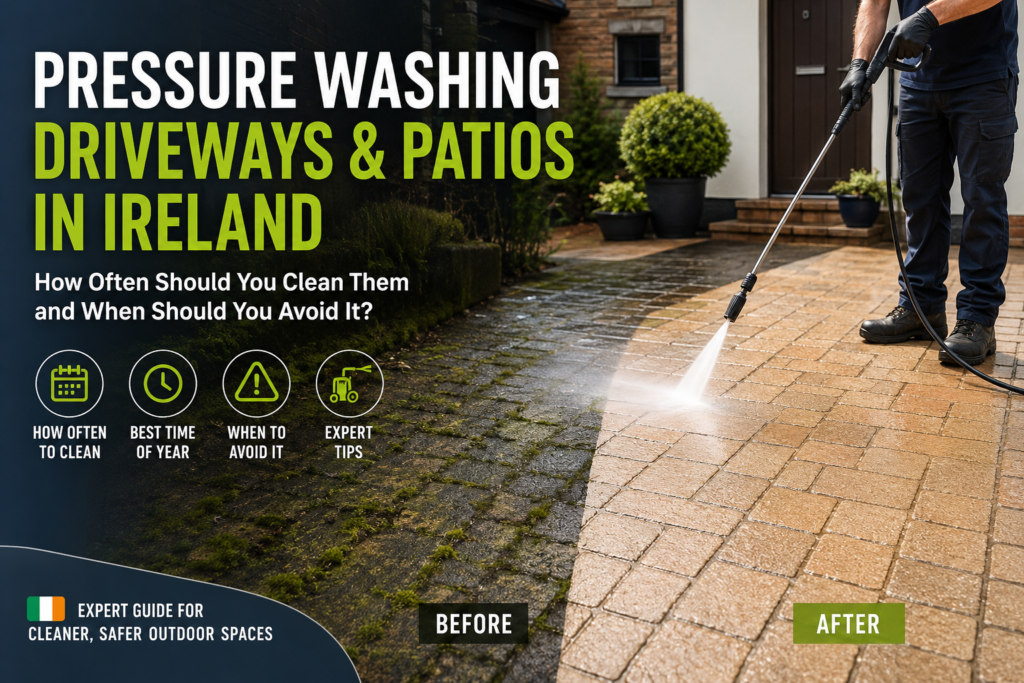
After a typical Irish winter, many driveways and patios don’t look quite the same. Moss begins creeping between paving joints, and dark stains become more noticeable. Surfaces can turn slippery after weeks of damp weather.
Many homeowners think the solution is simple: bring out the pressure washer and clean everything in one afternoon.
Sometimes that’s the right decision. Sometimes it isn’t.
Pressure washing is one of the most effective ways to restore driveways and patios, but timing, surface type, and weather conditions make a significant difference.
Understanding when to clean is just as important as knowing how to clean. In this guide, you’ll learn how often to pressure wash driveways and patios in Ireland and how to maintain them properly.
Why Do Driveways and Patios Get Dirty So Quickly in Ireland?
Ireland’s damp climate makes it difficult for outdoor surfaces to stay clean for long. Frequent rainfall, high humidity, and limited sunshine, particularly in shaded areas, create ideal conditions for moss, algae, and everyday grime to build up throughout the year.
While this often begins as a cosmetic issue, it can gradually increase the risk of slips if left untreated.
The most common causes include:
- Frequent rainfall that keeps surfaces damp
- High humidity that encourages moss and algae growth
- Fallen leaves and organic debris
- Shaded areas with limited sunlight
- Poor drainage that allows water to collect
- Regular vehicle or foot traffic
Regular maintenance and timely cleaning can prevent the accumulation of thick layers of dirt and keep outdoor surfaces easy and safe to maintain all year round.
How Often Should You Pressure Wash Your Driveway or Patio?
The right cleaning schedule depends on the type of surface and the conditions around your home. For example, a concrete driveway that gets plenty of sunlight will usually stay cleaner for longer than a patio that’s shaded by trees and exposed to constant dampness.
As a general guide, most homeowners in Ireland can follow the recommendations below:
| Surface | Recommended Cleaning Frequency |
| Concrete driveway | Around once every 12 months |
| Block paving | Every 12–18 months, depending on moss growth |
| Natural stone | Only when needed, using appropriate pressure |
| Resin-bound surfaces | Low-pressure or specialist cleaning when required |
| Patios | Usually, once a year, ideally in spring or early summer |
These timings aren’t fixed. If your property is surrounded by trees and receives little direct sunlight, you may find that moss and algae return sooner.
On the other hand, driveways and patios with good drainage and plenty of sunshine often stay cleaner for longer. Instead of following the calendar alone, let the condition of the surface guide your decision.
Fresh patches of moss, algae staining, slippery areas after rain, stubborn oil spots, weeds growing between paving joints, or dirt that no longer rinses away are all signs that it’s time for a thorough clean.
Dealing with these problems early is usually easier than waiting until they’re firmly established, and it can help reduce maintenance throughout the year.
What’s the Best Time of Year to Pressure Wash in Ireland?
When you pressure wash can be just as important as how you do it. Ireland’s weather plays a big role in how well outdoor surfaces dry after cleaning and how quickly moss or algae return. In most cases, spring and early summer provide the most favourable conditions, while winter is usually the least practical time for the job.
| Season | Is It Recommended? | Why |
| Spring | Best | Removes moss and algae that build up over winter |
| Summer | Very Good | Warmer, drier weather helps surfaces dry more quickly and makes sealing easier. |
| Early Autumn | Good | Clears organic growth before wetter weather arrives |
| Winter | Usually Avoid | Frost, heavy rain, and damp conditions reduce effectiveness |
For many Irish homes, late spring is often the most reliable time to pressure wash. The weather is typically mild enough for surfaces to dry properly, and removing winter buildup can help keep driveways and patios in better condition for longer.
When Should You Avoid Pressure Washing?
Pressure washing isn’t suitable for every situation. In some cases, waiting until conditions improve or choosing a gentler cleaning method can help prevent unnecessary damage.
Avoid pressure washing in the following situations:
- During freezing weather: Water can seep into small cracks and freeze, causing the material to expand and increasing the risk of further damage.
- Straight after sealing: Fresh sealants need time to cure fully. Washing too soon can weaken or remove the protective layer before it has properly bonded.
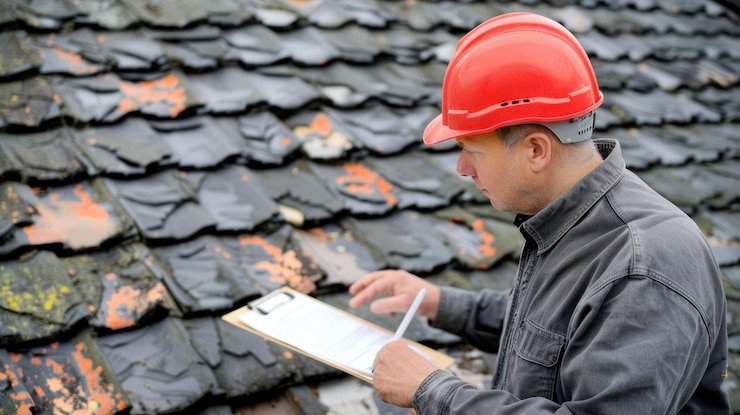
- If the surface is already damaged: cracked concrete, loose paving, or damaged pointing, it’s usually best to arrange the necessary exterior property repairs before pressure washing.
- Repairing these issues first helps prevent further damage during cleaning.
- On delicate materials: Older brick paving, natural sandstone, limestone, decorative pointing, and some resin-bound surfaces are better cleaned using lower pressure or specialist methods.
- During heavy rain: Rain reduces cleaning effectiveness, dilutes detergents, and makes the work area more slippery.
If you’re unsure whether a surface is suitable for pressure washing, it’s usually worth waiting until the weather improves or seeking professional advice.
Using the Right Pressure for Different Surfaces
A pressure washer can make a dramatic difference to the appearance of a driveway or patio, but using too much force or the wrong technique can leave permanent damage behind.
Every surface has its own cleaning requirements, so adjusting the pressure and equipment accordingly is just as important as removing dirt and moss.
Use the following recommendations as a starting point:
| Surface | Recommended Approach |
| Concrete | Moderate pressure with the correct nozzle |
| Block paving | Replace jointing sand after cleaning |
| Natural stone | Use lower pressure to reduce the risk of surface damage |
| Resin-bound surfaces | Low-pressure or specialist cleaning |
| Porcelain patios | Moderate pressure is usually sufficient |
Even with the right equipment, a few common mistakes can affect the final result.
- Using excessive pressure can leave permanent marks or etchings.
- Holding the nozzle too close may create uneven cleaning lines or grooves.
- Failing to replace jointing sand after cleaning block paving can encourage weed growth and reduce the stability of the paving.
- Washing cracked or loose surfaces before carrying out repairs may make existing damage worse.
- Choosing the wrong nozzle or cleaning technique can reduce cleaning performance and increase unnecessary wear.
A successful pressure wash isn’t about using the highest setting available. It’s about matching the cleaning method to the material you’re working on.
Simple Maintenance Tips for Longer-Lasting Results
A thorough pressure wash can restore the appearance of your driveway or patio, but a few simple habits will help keep it looking cleaner for much longer between deep cleans.
Here are a few easy ways to reduce the build-up of moss, algae, and everyday dirt:
- Sweep away leaves, soil, and other debris before they have a chance to trap moisture.
- Deal with moss as soon as it appears, rather than waiting for it to spread.
- Keep drains and gullies clear to prevent standing water.
- Cut back overhanging trees or shrubs where possible to improve airflow and allow surfaces to dry more quickly.
- If the surface is suitable, apply a sealant after cleaning to help reduce staining, improve water resistance, and slow the return of moss.
A few minutes of routine property maintenance now and then is often enough to prevent heavier build-up later.
DIY vs Professional Pressure Washing: Which Is the Better Choice?
Many homeowners wonder whether pressure washing is a job they can handle themselves. While some cleaning jobs are straightforward, others require a more careful approach to avoid accidental damage.
| DIY Pressure Washing | Professional Pressure Washing |
| Lower upfront cost | Higher-quality, longer-lasting results |
| Suitable for light cleaning | Suitable for all surface types |
| Limited equipment | Commercial-grade equipment |
| Higher risk of incorrect pressure | Pressure adjusted for each surface |
| Takes more time | Faster and more efficient |
| You’re responsible for any damage | Experienced handling of delicate materials |
If the surface is in good condition and you’re comfortable using a pressure washer, handling the job yourself can be a cost-effective option for routine cleaning. However, if you’re dealing with natural stone, stubborn staining, damaged paving, or any surface that requires extra care, hiring a professional pressure washer for property maintenance is often the safer choice and can help you avoid expensive repairs.
Frequently Asked Questions
How often should I pressure wash my driveway in Ireland?
For most homes, pressure washing once a year is usually enough. If your driveway is shaded, surrounded by trees, or tends to stay damp after rainfall, moss and algae may return more quickly. In those cases, it’s better to clean the surface based on its condition rather than following a fixed schedule.
Can pressure washing remove moss and algae?
Yes, it removes most visible moss and algae from the surface. For longer-lasting results, it’s worth treating the affected areas beforehand and keeping nearby drains clear to reduce excess moisture.
Is pressure washing safe for block paving?
It can be, provided the correct pressure and nozzle are used. Applying too much pressure may wash out the jointing sand that helps keep the blocks stable. Once the surface has dried, replacing that sand will help maintain the paving and reduce the chances of weeds growing between the joints.
What’s the best time of year to pressure wash?
Late spring and early summer are usually the best times to pressure wash in Ireland. The weather is often mild enough for surfaces to dry properly, making it easier to clean.
Should I seal my driveway after pressure washing?
Not every driveway needs sealing, but it can be a worthwhile extra step for surfaces such as concrete and block paving. Wait until the surface is completely dry before applying a sealant.
Conclusion
A driveway or patio doesn’t need regular pressure washing to stay in good condition. Cleaning it at the right time and using the correct method will do far more to protect the surface than simply washing it more often.
Always keep notice early signs of moss, algae, or staining also makes maintenance much easier. Dealing with small problems before they become bigger ones can reduce the risk of surface damage and help you avoid unnecessary repair costs later.
As part of your wider exterior property maintenance routine, regular care and cleaning habits will help keep your outdoor spaces looking their best throughout the year.