
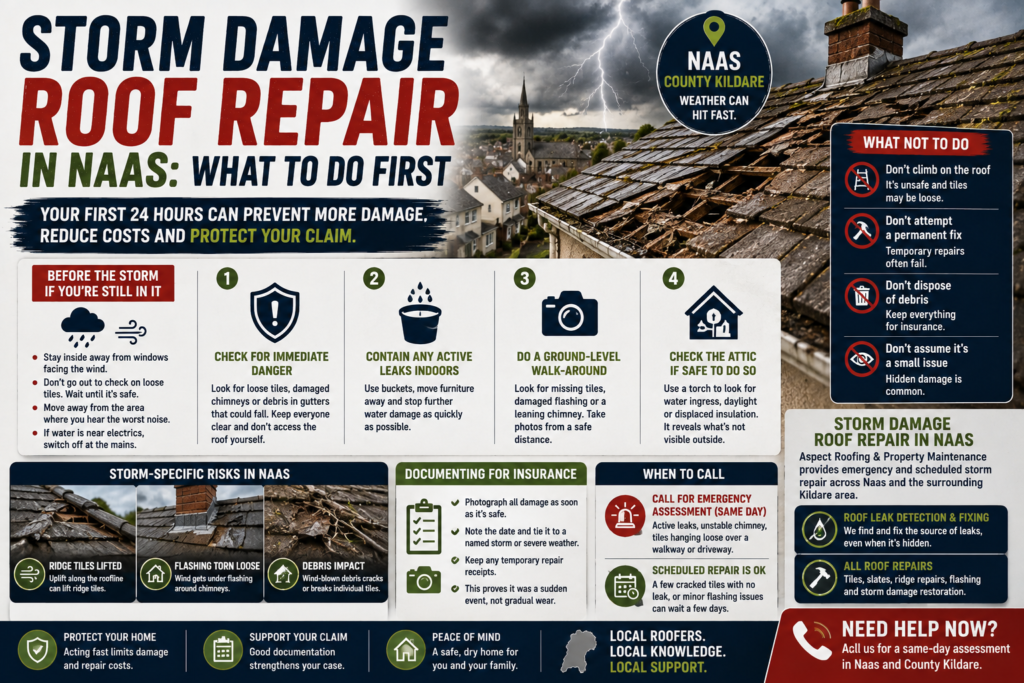
Storm Damage Roof Repair in Naas: What to Do First
Naas sits exposed enough to catch the full force of Atlantic storms rolling in across Kildare, and when a named storm passes through, the roof calls that follow it are rarely small. If your roof has just taken a hit, what you do in the next few hours matters more than the eventual repair itself. Here’s the order to actually do things in.
Before the Storm Passes: If You’re Still in It
- Stay inside and away from windows facing the direction of the wind — flying debris causes more injuries during storms than almost anything else
- If you hear tiles or slates coming loose, don’t go out to check. Wait until the wind has genuinely dropped, not just paused
- Move to a room away from the section of roof where you can hear the worst noise, particularly if you notice a ceiling starting to drip
- If water starts coming through near a light fitting or socket, switch off electricity at the mains as soon as it’s safe to move through the house
The First Hour After the Storm Passes
- Check for immediate danger before anything else. Look for loose tiles still hanging, damaged chimney stacks, or debris caught in gutters that could fall. If anything looks unstable, keep everyone clear of that side of the house and don’t attempt to access the roof yourself.
- Contain any active leaks indoors. Buckets under drips, furniture moved clear, towels to stop splash damage — the same basics as any leak, just under storm conditions where there may be more than one point of entry.
- Do a ground-level walk-around. From the garden or street, look for obviously missing or displaced tiles, damaged flashing, or a leaning chimney. Take photos from a safe distance — don’t get closer than necessary if debris is still settling.
- Check the attic if it’s safe to do so. A torch check for fresh water ingress, daylight showing through the roof deck, or displaced insulation tells you more than what’s visible from outside.
Storm-Specific Risks Naas Roofs Face
Naas and the surrounding area see enough exposed, elevated ground that wind-driven storm damage tends to concentrate on a few predictable failure points: ridge tiles lifted by uplift along the roofline, flashing torn away from chimneys where wind gets underneath it, and debris — often from nearby trees — striking and cracking individual tiles rather than causing widespread damage. Recognising which of these you’re looking at helps you describe the damage accurately when you call for help, which speeds up triage.
What NOT to Do in the First 24 Hours
- Don’t climb onto the roof yourself, even once the wind has dropped — a storm-damaged roof surface is unpredictable underfoot and tiles that look intact may not be securely fixed anymore
- Don’t attempt a permanent fix on damaged flashing or tiles — a rushed repair in storm-aftermath conditions often needs redoing properly anyway
- Don’t dispose of damaged tiles, insulation, or debris until you’ve photographed everything for insurance purposes
- Don’t assume a small visible issue is the whole story — storm damage often has a second, less obvious failure point that only shows up during a proper inspection
Documenting for Insurance
Storm damage is one of the more straightforward insurance scenarios precisely because it’s sudden and identifiable — but only if it’s documented as such. Photograph the damage as soon as it’s safe, note the date and that it coincided with a named storm or specific severe weather event, and keep any temporary repair receipts. This ties the damage clearly to a single sudden event rather than leaving room for a “gradual wear” argument later.
When to Call for Emergency Assessment vs a Scheduled Repair
Active water ingress, a visibly unstable chimney, or tiles hanging loose over a walkway or driveway are same-day situations. A few cracked tiles with no active leak, or minor flashing displacement with no water getting in, can usually wait for the next available slot rather than needing an emergency call-out — worth asking directly when you call, since it affects cost and how quickly someone can get to you.
Frequently Asked Questions
What should I do first after storm damage to my roof in Naas?
Check for immediate danger, contain any indoor leaks, then do a ground-level assessment and photograph the damage before calling for a repair.
Is it safe to inspect storm damage on my own roof?
Not from the roof itself — a ground-level and attic check is enough to assess urgency. Leave the roof-level inspection to a professional.
How quickly does storm damage need to be repaired?
Active leaks or unstable sections need same-day attention. Minor, contained damage can usually wait for a scheduled repair within a few days.
Will home insurance cover storm damage to my roof?
Most Irish policies cover sudden storm damage, provided it’s documented promptly and tied to a specific weather event.
What are the most common types of storm damage in Naas?
Lifted ridge tiles, chimney flashing torn loose by wind, and individual tiles cracked by wind-blown debris are the most frequent patterns locally.
Storm Damage Roof Repair in Naas
If your roof has taken storm damage, Aspect Roofing & Property Maintenance covers emergency and scheduled storm repair across Naas and the surrounding Kildare area. For an active leak specifically, our roof leak detection and fixing service tracks down exactly where water is getting in, even when the entry point isn’t obvious from inside.
Get in touch for a same-day assessment if you’re dealing with active damage in Naas right now, or to book a follow-up repair once things have settled. We know the storm-exposure patterns specific to Naas roofs and what tends to fail first locally.